
Fighting Flags, Friendships, and the Failure to Disagree
Making an Effort To Learn to Talk to Each Other

There was a flag-related controversy the last two times I moved somewhere. Recently, I moved to Manchester, and the United Kingdom has seen thousands of St George’s flags go up. When I moved to Barcelona (back in 2014), the increase in Senyeras was evident, and three years later, the independence movement organized a referendum to secede from Spain. I am not interested in the flags per se, but rather in what they spark: identity crises, debates, silence, and unique opportunities.
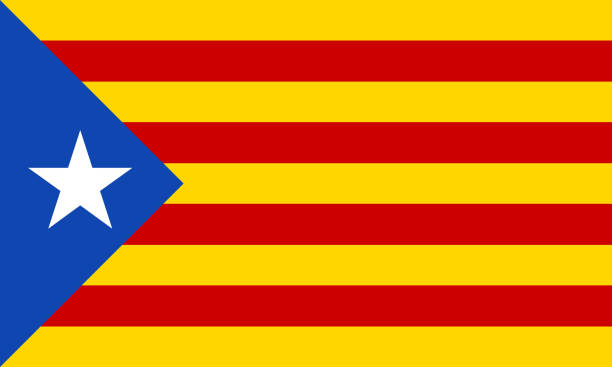
Before crossing the pond, I lived in the United States, where it is flags galore. Upon moving to Europe, I was relieved because the absence of national flags reflected an internationalist outlook and a recognition that other nations are in some ways better than one’s own.1 In Barcelona and throughout Catalunya, the Senyera is commonly flown to reaffirm identity, but it need not be separatist (compared with la estelada). *In my experience, most Catalans are ok with being part of Spain, but think their relationship could improve.
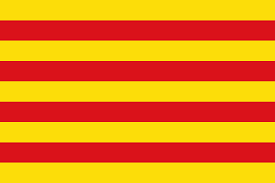
In 2017, the Catalan independence movement reached its zenith, and more and more esteladas were flown to showcase one’s political stance. There was also an increase in Spanish flags, which had previously been rare.
Students at the school where I worked reacted to this local controversy by bringing flags or donning bracelets, pins, t-shirts, and other items with flag-related imagery. Discussions flared, and shouting was heard in what used to be relatively calm hallways. Friends ceased being friends. Some students joined the youth sections of different political parties. It was tense. Teachers tensed up because of how deeply this had affected some of their families. The school, in its infinite wisdom, decided to ban all symbols and discourage conversation about the ongoing tense situation.
This decision was well-intentioned but misguided. This ban likely reduced tension and avoided some arguments and may have prevented physical fighting. Yet, I have always believed that schools should think about the long term rather than using short-sighted interventions to defuse problems. Other institutions made similar calls; in the footballing world, UEFA also banned these flags because FC Barcelona fans used to fly them during games.2 During one game, Scottish flags were used to represent the Catalan independence movement. Back to school.
Flags are potent symbols that can help to bind people and identify the Other. Rather than exploring their relationship to identity, I want to reflect on how flags create essential moments that may help democracies flourish or exacerbate their fragility. Flags are very strange things, and I was encouraged to write this post when I read
discussing these flags.
In total, I worked at that school for five years. This was the most significant moment, but we failed. We failed our city, our colleagues, our community, and the students whom we are supposed to serve.
In vain, I suggested to the school that rather than shunning debate, we should embrace it and encourage it. This was an opportunity for students to learn how to talk with those with whom they disagree. The internet and social media have made such conversations harder because they enable anonymous trolling and finding echo chambers. It is easy to forget that on the other side of the screen, there is a living, breathing, dreaming human. These discussions were and should be the lifeblood of the democratic process, and without them, the modern world is doomed. Some time ago, I wrote a post on being unable to have a conversation with a person who commented on my post.
This case was unique because it was happening in real time, and we had the students for eight hours a day. And it was local! What an opportunity.
We should have spent that time analysing this issue and helping students learn to question the assumptions they were making. The staff was divided too, some of whom had lost relatives to Franco’s regime. This exercise would have been exceedingly difficult for all. But, precisely, because the issue was emotional and because the staff did not agree on how it ought to be resolved, it was an exceptional opportunity to model civil debate and cheerful coexistence with those with whom you disagree. Modeling dialogue in this moment of severe tension could have been the best lesson we taught, yet we failed. It was an opportunity for all of us to grow emotionally, intellectually, and humanely in our effort to be better citizens.
These flags were special because they demonstrated how easily ideology can be used to turn a friend into a demon. How alluring it is to reduce a person to a single position. These flags reminded me how much poorer we all are when we allow this to happen.
One of my students had keenly embraced Vox, a party I find unpalatable, and established a relationship with their national youth organizer. He wanted to bring him to school as a guest speaker. This would surely have been controversial. I suggested that we reach out to other parties and organize either a conversation between them or a series of talks. We could maintain neutrality and encourage dialogue.
This was a non-starter.
There is some thinking to be done about providing a platform to some speakers, but in this context, we could unpack and problematicize their speech in the classroom.3
The school was a bubble. Rather than protecting the bubble and ignoring the world outside, we should have burst it. Some controversy would surely ensue. Some tears may be shed. Some friends may cease to be friends, but students and teachers would have had the opportunity to understand rather than demonize those who hold a different position. I think most friendships would have been saved, and we would come out kinder.
I hope that the United Kingdom can use this upheaval about flags to engage with one another rather than push each other away.
Democracies need disagreement, even rabid disagreement, without demonization; forgetting this is the real danger.4 I am deeply worried by what appears to be a refusal to recognize each other’s ideas and beliefs. I am even more concerned about the demonization of those with whom one disagrees and the unwillingness to entertain that they may have a point!
I don’t mean to suggest all flag-wavers are super nationalistic, but that some are. In general, I dislike overly strong nationalism, while thinking that an appreciation for heritage and history is good and healthy.
My understanding is that UEFA has a blanket ban on political statements, and this ban was related to the flag taking on a more potent political meaning. To this day, Barcelona fans whistle when the UCL anthem comes up.
I have been planning a post that addresses that tangentially addresses this topic, and I hope to write it soon.
I tend to think that there is a small core that needs protecting and that disagreement over other matters can be rather healthy.
You might find it quite relevant if not interesting that in Hebrew the root of the word flag is the same as the root for “believing in” and all related verbs for supporting an idea. Clearly not a coincidence.